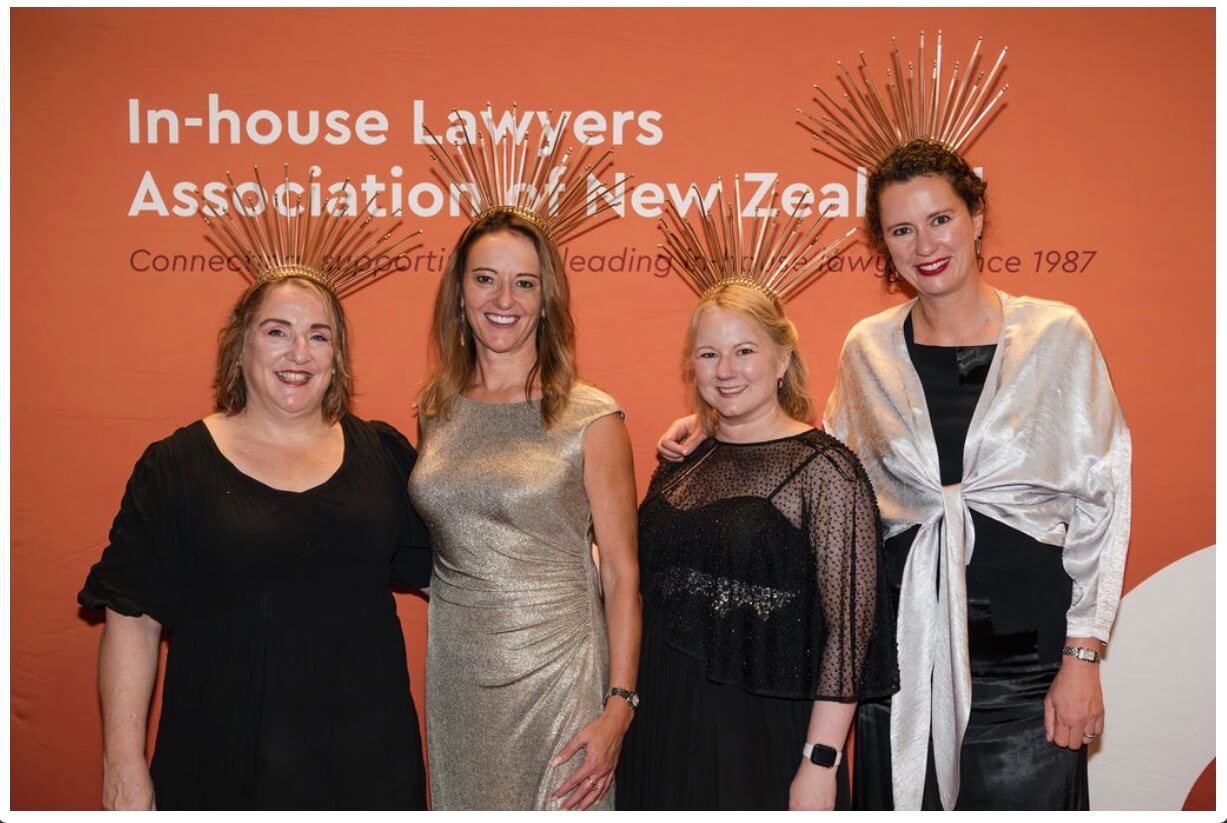
The conference opened with a challenge: What does it take to keep your fire burning as an in-house lawyer? Not the fire of busyness or burnout, but the deeper flame of independence, courage, humanity, and influence.
Under the theme Taku Ahi Tūtata – Ignite, two days of sessions asked us to look hard at the role we play inside our organisations, and the impact we have on the people and systems around us.
It was a conference that reminded us that in-house lawyers don't just advise. We shape. We influence. We hold the line. And sometimes, we're the only ones in the room who can see the spark before it becomes a fire.
Where were the lawyers?
Steven Vaughan opened with a jolt — a tour through the UK Post Office scandal, Robodebt, and Crown Casino, and the question that hung over the room: "Where were the lawyers?" His message: ethical failure rarely comes from bad people. It comes from ordinary people in systems that make it easy not to ask the hard questions.
- In-house lawyers in these cases weren't bystanders — they were shaping decisions, drafting one-sided contracts, and maintaining faith in systems they should have questioned
- Independence erodes gradually: confirmation bias, "marking your own homework", pressure to be helpful over the duty to be honest
- Are we lawyers first? In-house advisers? Business partners? Or agents of the rule of law?
"If all you are is a highly paid commercial person, what's the point of that?"
The ethics panel that followed brought the theory to earth. Una Jagose KC spoke about the Crown's role in the Abuse in Care Royal Commission — and the moment she realised how easily lawyers can lose sight of the human beings behind the file.
Her message: "Don't forget who you are. And don't forget who the person in the file is." Independence isn't just a rule — it's an act of humanity.
Courage isn't optional
A thread ran through several sessions: why have we built a profession where bravery is required just to do our jobs well? The kindness versus niceness session reframed something we think we already understand.
- Kindness serves the work. Niceness serves the moment.
- Kindness is proactive — something you do, not something you feel. Often the harder option
- Values on the wall mean nothing if behaviour doesn't match
- Burnout, disengagement, and ethical drift come from the gap between what we say and what we tolerate
The fire here was cultural: kindness is infrastructure. It must be modelled, practised, and enforced.
Transparency, technology, and the fires ahead
John Allen arrived with the energy of a drumbeat — the Ombudsman is not part of the system; it is part of the community. Pick up the phone early, not late. And as AI plays a larger role in decision-making, independence is a state of mind we'll need to work harder to maintain.
The facial recognition session grounded the abstract in something real. The Foodstuffs trial showed what "good" looks like: clear purpose, proportionality, a robust PIA done early.
- Just because you can deploy it doesn't mean you should
- Accuracy, bias, and public trust remain live issues — there is no representative NZ biometric dataset
- Get your lawyers in the room before the decision is made, not after
Hayley Evans asked the question every in-house lawyer wrestles with: which risks matter, and which ones will burn the house down?
- Statutory risk is always the foundation. Contractual risk is often misunderstood. Litigation distracts. Enforcement is about how power is exercised — by you, or against you
- Know your organisation's influential people. Get invited into the right rooms. Never waste a good crisis
- What's the likelihood? What's the consequence?
Big picture thinking
Brad Olsen painted a picture of an economy under strain: uncertainty, inflation, falling confidence, rising liquidations. The recovery expected for 2026 has been pushed to 2027 or 2028.
- Expect to do more with less — across every sector
- Proactive communication reduces reactive work
- AI will speed up process work — but not replace judgement
His closing line could have been the theme of the conference: uncertainty is the only certainty. BAU now includes crisis.
Te Aopare Dewes, Gwendoline Keel and Cheri-Lee Atkinso spoke about engaging with the Māori economy — not as a niche, but as a central part of the commercial landscape, projected to reach $200 billion by 2030.
- Understand the tikanga before you engage
- Consultation is not just prior notice — co-design and co-management are how you build something that lasts
"No one cares how much you know until they know how much you care."
Practical tools from the fire
The conference also delivered sharp, usable insights on areas generating real risk right now.
- Employment law: new remedies provisions represent a significant shift. Have a sound, documented process to lean on
- Challenging conversations: name the actual issue in plain language. The conversation can't move until someone does — and while you wait, someone is paying the cost
- Crisis management: the best first move is to think, not to react. Decide early what principles will guide your actions, before you have all the information. Make it a project. In-house counsel have the big picture — that perspective is most valuable when things are moving fast
Building something that lasts
Vanessa Simon and Jacqui Goodall spoke candidly about leading through disruption. Build your mindset before you need it. Resilience isn't something you find in a crisis — it's architecture.
- Resilience is belonging — the relationships and community that hold you when things get hard
- Radically accept what's outside your control. Move forward without the weight of anger and resentment
Andrew Little's reflections on moving from in-house lawyer to cabinet minister were clear: you never leave your legal skills behind. Legal skills alone won't equip you for leadership — but they will enable it.
Keeping the fire lit
The conference reminded us that the fire we carry as in-house lawyers is not about intensity — it's about integrity.
It’s the fire that lets us:
• ask “should we?” when everyone else is asking “can we?”
• hold our independence in environments built on influence
• see the human being behind the file
• speak truth to power
• build cultures where kindness is a discipline, not a slogan
• navigate uncertainty with clarity and courage
Taku Ahi Tūtata – Ignite is a call to action.
Keep your fire burning. And help others light theirs.

Notes and reflections compiled by Mary Gordon, with insights from the Juno Legal team at ILANZ 2026.
Ngā mihi nui to the ILANZ team for curating such a thoughtful and timely conference, and to Mary and our Juno team for bringing these insights home to share.
These reflections are a reminder of why we do this mahi, and why we do it together.
At Juno, our team of experienced in-house lawyers bring curiosity, experience and clarity to their client engagements. Whether you need a sounding board, an extra pair of hands, or someone strategic to help you shape the path ahead, we’re ready when you are. Learn more about how we support in-house legal teams.