Reflections from one of New Zealand’s pioneering in-house lawyers
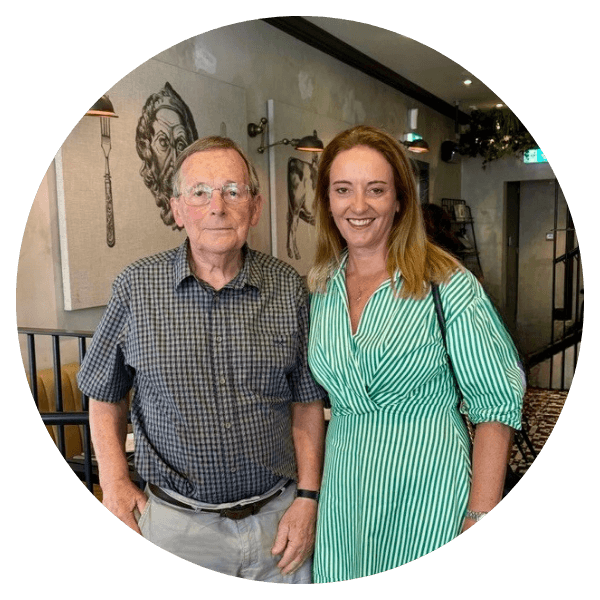
Juno Director Helen Mackay recently connected with John Shaw, who moved in-house in the 1970s, when it was far from common.
Over the decades that followed, he built legal departments from scratch and helped establish CLANZ (now ILANZ). We’re grateful for the opportunity to share his reflections.
We began by asking what shaped his approach to in-house legal work.
You have had an interesting and varied career. What did taking mainly business roles before law roles teach you about being an in-house lawyer?
That business clients want lawyers they respect and trust and enjoy working with to provide them with constructive and workable solutions to their concerns.
"Business clients want lawyers they respect and trust and enjoy working with." | ||
That they do not want, and will avoid consulting lawyers who, by their manner, appear to want to block or hinder their plans or make them too difficult or expensive to carry out. Many of them do not seek legal services, so the in-house lawyer has a continuing need to demonstrate the value they can add.
Moving in-house in 1979 was unusual. What drew you to it, and how did your roles at Alex Harvey Industries and DB evolve over time?
I had seen, overseas, how effective lawyers can be in-house and I was confident I could build a satisfactory and rewarding career in what was at the time (1979) a very unpopulated part of the legal profession in New Zealand.
I was the first in-house lawyer at each company, so it was inevitable that the role would grow and evolve. At Alex Harvey Industries (AHI), I was fully engaged for four years in growing from scratch the legal services function for the head office and six business groups, each of them a large and important player in the economy. Previously, the groups had used outside lawyers occasionally, but most times they carried on without any legal scrutiny or assistance.
In my 17 years at Dominion Breweries (DB) I was expected to develop the legal department and, at various times, also given overall responsibility for other functions, including insurance, risk management, superannuation, personnel, executive incentive and employee share schemes, company secretarial, the in-house share registry, the annual report, shareholder meetings, stock exchange liaison and board administration.
I was also able to recruit a first-class team of young lawyers to work directly with various decentralised businesses, while I was able to provide overall supervision of the work and decide what should be briefed out to law firms.
How was the in-house legal profession perceived then, and how has that changed?
"It was very clear that we were looked down on by many in the profession. | ||
I was a member of an Auckland Law Society committee called Lawyers in Commerce Committee. It was very clear that we were looked down on by many in the profession as refugees from the hard knocks of mainstream law work, or happy to work undisturbed and unnoticed in some quiet legal speciality.
In fact, some members of the NZLS Ethics Committee actually tried to restrict our ability to practise, unsuccessfully promoting the idea of a limited licence. This was because, with their lack of understanding of how things worked, they thought in-house lawyers were not independent and would always change their advice to suit what their bosses wanted. On one occasion, my invitation by a large law firm to a dinner in honour of Lord Denning actually stated that I was welcome even though I was “outside the law”. In accepting, I was able to flourish the classic dictum (of Denning himself) that in-house lawyers have the same rights and obligations as all other lawyers.
Looking back, can you tell us about a career-defining moment?
Two thoughts. First, the permanent confidence boost from being in VUW’s team that was adjudged the winner of the national law moot competition in 1963, especially as one of the members of another team became an eminent QC and the other a law professor.
Secondly, taking a long time over my OE. I spent six years in publishing in London and three years in a business educational capacity for a US computer company at its European HQ in Brussels. All of it as an executive, not as a lawyer. Invaluable experience for an in-house counsel.
What advice might you be able to share for anyone early in their professional journey as an in-house lawyer today?
Go for it! But find a role you enjoy and find satisfying.
You have made a significant contribution to the legal profession, as a founding member of CLANZ (now ILANZ), a recipient of its Lifetime Achievement Award, and through your service on the NZLS Board and Council.
What did you gain from those experiences?
These gave me a much better understanding of the contribution a lawyer can make inside an organisation and a greater sense of satisfaction in helping to improve the standing and perception of the in-house lawyer in the business community, and even in the rest of the profession.
You are heavily involved in your community and generous with your expertise and time. How did you manage the transition from paid work to community contribution?
From the time I returned to New Zealand, I became involved in voluntary, unpaid work. It wasn’t difficult to do, and it made my working day more interesting and stimulating. However, it did mean lots of after-hours meetings and quite a bit of travel. Everything I got involved in was done with the consent of my employer. I suppose the lack of hourly time-sheets made that easier.
I was fortunate that there were always very deserving causes to help with and very fortunate that I had wonderful support from my dear wife Ann and our children.
Ngā mihi nui to John for sharing his reflections so openly with Aotearoa’s in-house legal community. His perspective is a reminder of the steady work that has shaped the in-house role over time.
This article forms part of our In-house legal spotlight series, sharing reflections and insights from across Aotearoa’s in-house community.