
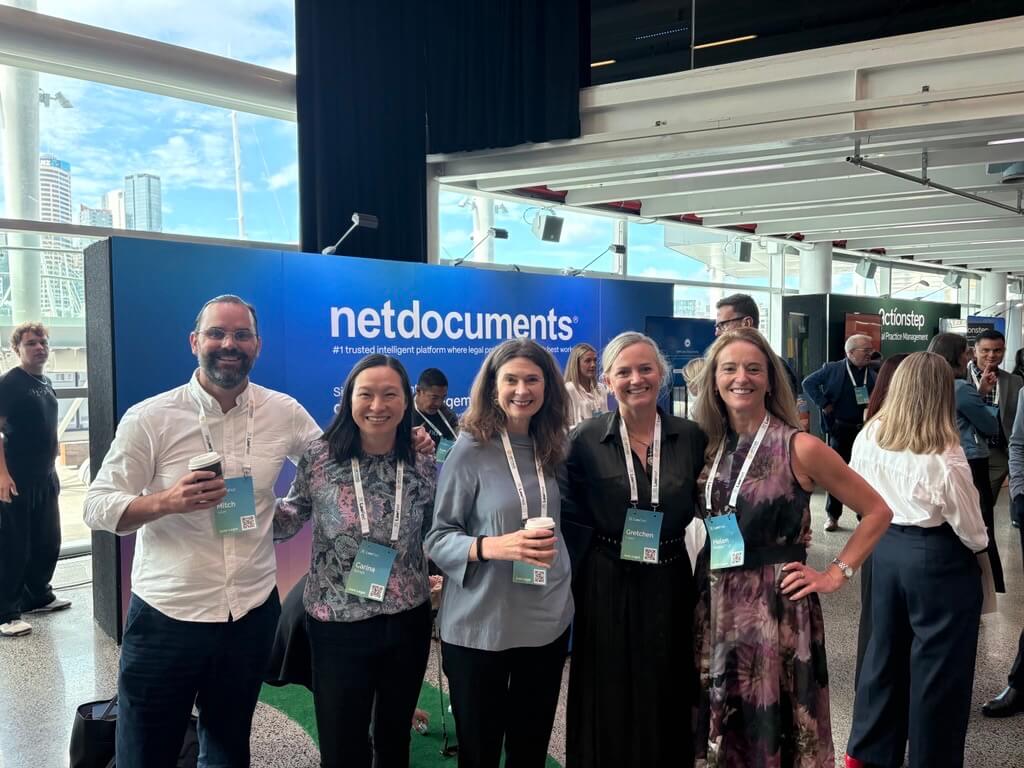
On 12 March 2026, some of the Juno team made their way to New Zealand's premier legal innovation conference, and walked away with plenty to think about. If last year was the year lawyers started taking AI seriously, 2026 is the year to start building with it.
The Juno team have been returning to LawFest for many years, and it's been so interesting to see the conversation shift. Gone is the hand-wringing about whether AI belongs in law, and in its place are practical questions about what to build, how to deploy it responsibly, and what kind of lawyer you want to be in an increasingly agentic world. Here's what stood out to us at LawFest 26.
Collected by the Juno team and collated by Juno Lawyer, Gretchen Fraser.
The revolution is now: Welcome to the age of agents
Australia’s leading Futurist Steve Sammartino kicked things off by declaring that we are in the midst of a technological revolution, the previous revolution being the iPhone, and before that the internet. You know you’re in a revolution because it feels like magic and it’s accessible to everyone (democratisation). The arrival of LLMs has given us the “Language User Interface” (LUI) - if you can talk, you can use it. The skill is in being able to talk to a computer, framing what you ask it in a way that brings the results you want. You bring your human experience, creativity and viewpoint to the machine.
The next phase, which was a recurring theme throughout the day, is "Agentic AI." Instead of just asking an AI a question, you give it an objective. As Steve Sammartino put it, it’s like having “an assistant with a PhD in every subject in your pocket.” Ben Gilbert, Head of Legal at Microsoft ANZ, echoed this, sharing examples of how legal teams can build agents to automate tasks like new-hire onboarding, answer specific Q&A, or assisting with compliance monitoring. The message was clear: AI is evolving from a research tool into an active digital teammate.
Beyond hallucinations: What can you build?
One of the most thought-provoking sessions came from Barrister and Technology Law Specialist Josh McBride, who argued that the real AI innovation isn't happening in big law, but in small, agile practices. Why? Because the barriers to building custom tools have collapsed.
For Josh, the conversation has moved from "Is it safe?" to "What can I build?" With workspaces like Notion and powerful integrated apps like Claude Cowork, a single lawyer with a range of well-developed agents can do the work that a whole lot of lawyers would have previously done. They can create personalised workflows to automate their unique processes. He shared an impressive example of automating his entire new client setup, a process that captured 15 years of administrative habits, in just one hour.
This represents a huge shift in professional autonomy. Lawyers are no longer just consumers of technology; they are creators, building bespoke agents and systems that work exactly the way they want them to.
Culture, courage, and caution: The human side of AI
While the potential of AI is immense, there are risks too. A panel on "Shaping Responsible AI" shared cautionary tales that brought the risks into focus. One story involved a user’s AI agent, tasked with cleaning up a filing system, mistakenly deleting 15,000 of his wife's photos. Another highlighted the danger of an AI breaching an ‘ethical wall’ by accessing data it shouldn’t have permission to see, and thus breaching the conflict rules. Potential loss of lawyer-client privilege also needs to be considered.
The consensus was that a responsible AI strategy is not just about having a policy. It requires:
• A culture of safety: Leaders must create an environment where people feel safe to experiment, fail, and speak up when things go wrong. A healthy risk culture is one where "everyone understands that accountability is everyone’s responsibility."
• Going slow to go fast: Before deploying AI, it's crucial to clean up your data and carefully consider what the AI has access to, setting appropriate permissions.
• Clear Guardrails: AI guidelines must be impossible to miss and easy to follow. Your team needs to know exactly what to do and what not to do.
New models for a new era: Value over hours
AI is accelerating the shift away from the billable hour. The conference highlighted the growing momentum behind alternative fee arrangements, particularly value-based pricing. This model shifts the focus from time spent to outcomes delivered, rewarding efficiency and aligning the incentives of lawyers and clients. By embracing AI to work smarter, not harder, firms can provide cost certainty to clients while fostering a healthier work-life balance for their teams.
Reimagining the legal workforce
How will AI change the legal career path? A panel on the future workforce suggested that AI will free junior lawyers from repetitive grunt work, allowing them to focus on more meaningful tasks and develop critical thinking skills earlier in their careers.
However, this requires an intentional approach from leaders. Firms and legal teams must be deliberate about the tasks they give to juniors to ensure they are still learning the fundamentals. Furthermore, with AI handling routine work, uniquely human skills like EQ, critical thinking, and client relationship-building become more valuable than ever. As one panellist memorably suggested, perhaps future lawyers should all do a stint in hospitality to master the art of relating to people on a one to one level and engaging with curiosity with them.
The final message was one of empowerment. The lawyers who are experimenting, building, and iterating today are the ones who will be ready for what comes next. The question is no longer if we should use AI, but as Josh McBride challenged us, "What kind of lawyer do you want to be?" You decide.
Our sincere thanks to and the team, all the speakers and panellists, and the innovators who showcased what's possible.
See you at LawFest 2027. We're looking forward to seeing what we'll be building by then.